Home Blog Page 429

Misconceptions About Accountancy Creating Barriers For Next Generation Of Talent Says Grant Thornton

0

New research shows that many young people have misconceptions about careers in accountancy which may be creating unnecessary barriers and preventing them from seeing it as an attainable option, limiting the potential future talent pool of the profession.

In the research, leading accountancy firm Grant Thornton UK LLP explores Generation Z’s view of accountancy as a career. Analysing the responses of 2,000 people aged between 16 – 25 in the UK, the study seeks to better understand the attitudes and perceptions towards the accountancy sector of this age group.

The top misconceptions held by Gen Z about accountancy, identified in the research, are:

62% believe you need high grades to become an accountant

57% believe you need to go to university to become an accountant

57% think training for accountancy qualifications is expensive

53% think accountants sit at desks all day

Outdated or limited careers advice impacting understanding

The level of misunderstanding about the profession identified by the research may be explained by the finding that two thirds (65%) of young people have never received careers advice about accountancy.

Those that have are most likely to have received it at school or college, however the type of school attended affects how much information young people receive. Those attending private schools are 20% more likely to have received careers advice about accountancy than those from comprehensive schools. Private school students are also more likely to know an accountant than those attending comprehensive schools (52% vs 43%).

Social media and online research are the next most popular ways to source information about accountancy for Gen Z. Those from lower socio-economic backgrounds are more likely to find information in this way, they are also less likely to receive advice about the profession from a family member or friend.

Richard Waite, People and Culture Director at Grant Thornton UK LLP, said:

“There are now so many different routes available for young people considering joining the accountancy profession, whether that is starting on an apprenticeship straight from school, undertaking an internship or placement, or following the traditional graduate route. But it’s clear that there remain significant, and detrimental, misconceptions about access to and working in the accountancy profession.

“It’s therefore vital that employers, such as Grant Thornton, take action to help bridge that gap so we do not miss out on attracting the next generation of new and diverse talent to the sector. Employers need to take the time to actively educate young people, to reach out and work with schools in target areas, such as social mobility cold spots, to tackle some of these false barriers and provide much needed advice and insight to those considering the next step in their lives.”

The attainability gap

The research finds that the school you attended has a significant impact on whether you view accountancy as an attainable career. Private school attendees are 25% more likely to believe that a career in accountancy is attainable than those from comprehensive schools.

Gender is also found to impact young people’s perceptions of attainability. Men are 13% more likely to believe that a career in accountancy is attainable than women. Non-binary people are less likely than men or women to feel a career in accountancy is possible.

Overall, half of respondents believe that accountancy is an attainable career for them, while one in four (24%) disagreed. Of those who disagreed, one third attributed it to not knowing enough about the profession to consider it for a career.

Carl Williams, Managing Partner at Grant Thornton UK LLP in the North West, said:

“It’s clear that the accountancy profession needs to work harder to bust historic misconceptions. There remain clear misunderstandings about not only the routes to entry but also the scope of the career on offer, which may be preventing many from considering it as an option.

“Both the people and the careers available within accountancy are now more varied and diverse than ever before, with opportunities for international travel, varied work across different sectors and specialities and long-term career prospects. It’s evident that we need to showcase this more prominently and shine a light on the reality of the working accountancy world and the broad and rewarding career path it can offer.

“The school you attend, your background or gender should not dictate your access to information or the career path you follow yet our research shows that these factors contribute to the level of exposure to and understanding that a young person may have of the profession.

“Volunteering our time, through established initiatives such as Access Accountancy, RISE and our own firm’s Schools Enterprise Programme, to build confidence and knowledge with a wider range of young people will encourage a better understanding of the sector. Without a concerted effort to tackle these lingering misconceptions, we risk, inadvertently, missing out on a huge diverse pool of untapped talent.”

Citwell Group pursues its growth strategy internationally with a new office in Boston

0

One of Europe’s leading supply chain and operations consultancies, Citwell Group is opening an office in Boston. A strategic move aiming to consolidate its response to the needs of French, American and international customers and confirm its position in the US market. This move is in line with the firm’s development plan, which aims to achieve international sales growth up to €15 million by 2028.
CITWELL US: RAPID MARKET GROWTH

The Citwell Group is in direct competition with high-profile consulting firms already established in the United States. If we want to increase our chances of winning global contracts with them,” explains Citwell President Laurent Penard, “we need to expand internationally. The American market is by far the most important for consulting services, and the easiest for Citwell to access”. Indeed, the group already has its first customers in the US, a multicultural team of 7 employees, and a differentiating offering that should rapidly accelerate its growth in this market.
By 2028, the Citwell US office will reach the critical size of 40 employees, representing 20% of Group sales. 

HMG Paints launch cross-linked water based floor paint

0

HMG Paints, the Manchester based independent paint manufacturer, is thrilled to announce the launch of its latest innovation, HydroPro Floor Paint. This cutting-edge water-based floor paint is designed to transform floor finishing with its cross-linking formulation that ensures exceptional durability and a superior finish for both internal and external applications.

HydroPro Floor Paint boasts a unique formula that combines the strength of cross-linking technology with the convenience of water-based application. This innovation results in a tough, hard-wearing mid-sheen finish that’s ideal for a variety of spaces, from domestic garages and workshops to light-industrial environments. Once cured, HydroPro Floor Paint becomes resistant to oils, grease, and light industrial traffic, providing a long-lasting solution for a number of areas.

“We’re very excited by the launch of our new HydroPro Floor Paint with its superior drying and recoat times, this offers so many possibilities for the professional decorator and maintenance teams.  A real alternative for solvent based floor paints,” commented James Burton of HMG Paints. “This is the first product that is part of a new portfolio we’ve been putting together for the professional decorator and light industrial market and we’re excited to reveal even more in the coming months.”

One of the standout features of HydroPro Floor Paint is its remarkable fast drying times, allowing professionals to apply multiple coats within a single day. This not only expedites the painting process but also minimizes downtime, enabling quicker project completion. With HydroPro, efficiency and quality go hand in hand.

Key Advantages of HydroPro Floor Paint:

  • Cross-linking Formulation: The cross-linking technology in HydroPro ensures exceptional adhesion and durability, making it suitable for both interior and exterior applications.
  • Smooth Finish: HydroPro Floor Paint leaves behind a flawless finish that enhances the aesthetics of any space.
  • Low Odour/VOC: Say goodbye to strong paint odours. HydroPro’s low odour and VOC content make it a preferable choice for enclosed environments.
  • Quick Drying: HydroPro’s rapid drying times mean less waiting and more productivity.
  • Stain Resistant: The paint’s resilience extends to its resistance and has been tested against everything from Diesel and engine oils to wine and coffee.

Available in a range of stock colours including Light Grey, Mid Grey, Dark Grey, Yellow, Tile Red, and Mid Blue. HydroPro Floor Paint lets you tailor the look of your floors to your specific preferences. Each colour is available in a convenient 5-litre size, ensuring you have ample coverage for your projects.

HMG Paints’ HydroPro Floor Paint redefines the standard for floor finishes, offering a blend of durability, efficiency, and aesthetics. Whether you’re a professional contractor or a DIY enthusiast, HydroPro is the ultimate choice for achieving stunning and enduring floor surfaces.

HydroPro Floor Paint is available directly from HMG via shop.hmgpaint.com or via their ever-expanding network of specifically chosen distributors. All of HMG Paints portfolio is Made in Britain certified and is produced entirely at its Riverside Works factory in Manchester. HMG has also launched a new Product Tester campaign where users can sign up to get early access to new HMG products you can sign up via.: https://shop.hmgpaint.com/product-tester-sign-up-page.

If you require further information on the press release, please contact:
Stephen Dyson
HMG Paints Communications
[email protected]
0161 205 7631

HMG Paints Ltd is the UK’s leading independent Paint Manufacturer and a proud, family-owned business situated in Manchester. Working alongside new and long-term customers, HMG are committed to sustainability, innovation and customer satisfaction. With over 90 years’ experience in developing innovative coatings, HMG’s portfolio of wet paint and aerosols cover virtually every type of surface imaginable across a whole host of industries including industrial, commercial vehicle, decorative, automotive, protective coatings, defence, toll manufacturing, wood finish and arts & craft. HMG have a drive to set the standards for the industry not just meet them.

For more information, please visit www.hmgpaint.com or visit www.shop.hmgpaint.com to discover decorative paint and inspiration.

Connect with HMG Paints on FacebookInstagramTwitter and LinkedIn

The Chameleon Agency Booms With 1000% Year On Year Growth, Thanks To A Raft Of New Business Wins

0
The Chameleon Agency has today announced they have had a bumper 2023 with 1000% business growth from August 2022 to August 2023. The agency’s success is thanks to winning significant new clients and producing events for leading brands from all sectors, working with Metsä Group, Boohoo Group, Teamwork, Three, Convatec, GBG and a project for The Trafford Centre.


The creative agency has been appointed by telecoms giant Three following a three way pitch. The retained contract is to create and produce the business’ internal events calendar, including employee engagement events, family events and supplier events for both their Glasgow and Reading headquarters.


Manchester’s world renowned shopping and leisure destination, The Trafford Centre has also  appointed Chameleon to produce their 25 year consumer anniversary party in September 2023, this will include top entertainment acts and a fantastic show. Chameleon has also been appointed by project management platform, Teamwork.com to produce their internal and client-facing events.


Following on from project work in 2022 Chameleon continues to work with Metsä Group, Convatec and GBG.


Commenting on the agency’s new business success, The Chameleon Agency, Founder and Executive Producer, Joe Gilliver said: “We are thrilled to have won this raft of new business, with excellent clients. We’ve already hit the ground running with Three and produced their summer schedule including Hawaiian Luau employee events and fun beach family events in Glasgow and Reading and an educational supplier event for their technology team. We are currently busy helping with the planning of the Trafford Centre’s 25 year anniversary, with some fantastic acts.  2023 has seen us deliver some very cool projects from fashion shows for Boohoo, through to award shows for the Metsä Tissue. I can not lie, it’s been a tough few years, but I am confident that Chameleon is now accelerating and I can’t wait to see what the rest of the year holds. “


About The Chameleon Agency:
The Chameleon Agency is an agile creative events agency that enables businesses to connect and engage with their employees and external audience. Specialising in purposeful events The Chameleon Agency enables teams to feel they belong to an organisation. Founded by Joe Gilliver, the trusted global team manages resources to make campaigns cost effective. Based in Manchester, The Chameleon Agency include Three, Convatec, Manchester Tech Festival, Boohoo Group, Paramount, Metsä Group and Total Fitness as clients.

Building sector must play its part in reducing CO2 emissions

Much more serious consideration must be given to cutting whole-life CO2 emissions of buildings – from the production and transport of materials to the disposal of old properties – if the construction industry’s carbon footprint is to be substantially reduced, University of Manchester academics have warned.

In an article based on research conducted in partnership with the University of Melbourne, Judy Too and Obuks Ejohwomu reveal that the building sector is the single largest contributor to greenhouse gas emissions, accounting for 40% of global emissions, with the UK building sector responsible for approximately 25% of domestic emissions.

They write: “At a tipping point for global action on climate change, this is truly building a house on sand.”

In their piece, published by the University’s policy engagement unit Policy@Manchester, Ms Too and Dr Ejohwomu propose three areas where policymakers can take positive action to reduce emissions in buildings.

First, they argue that manufacturers should be mandated to produce Environmental Product Declarations (EPDs) for all materials, adding: “This will build the necessary knowledge infrastructure, while increasing awareness of the embodied carbon content of building materials.”  Acknowledging that the market may not yet be properly prepared to meet the necessary requirements “due to significant gaps in primary data,” they suggest a series of graduated steps including the short-term use of industry wide EPDs with product specific EPDs becoming mandatory within two years.

Second, based on their research, the University of Manchester academics believe that end-of-life treatment of materials and buildings is often overlooked.  They advocate the update of building code regulations to include considerations for whole-life carbon impacts.  Ms Too and Dr Ejohwomu write: “This update will mandate whole-building Life Cycle Assessment, shifting the focus from prescriptive emission limits to evaluating and optimising the overall performance of the building in terms of its environmental impact.”

Third, they argue for the introduction of “project-level carbon budgets based on predefined boundaries and benchmarks aligned with sectoral carbon limits” with a target time of three to five years.  They explain: “These limits establish precise emission targets that building projects must meet, with enforcement mechanisms such as audits and monitoring systems in place to ensure compliance. By implementing such limits, projects are held accountable for their emission levels over the building’s lifecycle, thereby driving carbon reduction within the building sector.”

Summing up how their research can enable the building sector to reduce CO2 emissions, Ms Too and Dr Ejohwomu conclude: “By acting on these recommendations, policymakers can lead a combined effort to balance environmental goals with economic considerations.  To not do so and continue to ignore the whole-life emissions of buildings risks locking-in unsustainable buildings for decades.”

Built on sand: the need for new environmental standards in the construction industry is available to read on the Policy@Manchester website.

Major Investor Coalition Calls on G20 to Revise Agricultural Subsidies

0

A major collaborative investor network group has urged the wealthier countries from the G20 group to align agricultural subsidies with their climate goals by the end of the decade.

FAIRR, a group launched in 2016 composed of 32 investors managing around £5.7 trillion in assets, including Britain’s largest asset manager Legal & General Investment Managers and the fund arm of BNP Paribas, announces their first ever call to the wealthier countries’ finance chiefs prior to the G20 summit set to take place in India next month.

The intervention follows a smaller request to the European Union in 2021, amid concerns about the risks to investment portfolios of inaction, and comes following a UN report which revealed that 87 per cent of the $540 billion in total annual subsidies to agricultural producers included measures that were potentially harmful to nature and human health, and price distorting.

A landmark UK Government report, the Dasgupta Review, also found that subsidies caused $4-$6 trillion in damage to nature each year. At COP15 in December last year, a global deal was struck to tackle the issue and preserve biodiversity, including the reform of subsidies.

Helena Wright, policy director at the FAIRR Initiative, noted the importance of richer countries acting urgently.

To address the issue further, FAIRR called for governments to link their financial support to the sector with their environmental obligations, including the Paris Agreement on climate change and the pledge to protect biodiversity.

Laimonas Noreika, CEO of co-founder of HeavyFinance, commented: “As we look ahead to COP28 and the global roadmap for the food supply chain, it’s vital to see such a collaboration of major influential bodies advocate for aligning agricultural subsidies with climate goals, especially as we know agriculture is a significant contributor to global greenhouse gas emissions, accounting for approximately 20 per cent of total emissions.

This unified effort demonstrates a powerful commitment to tackling global challenges through financial influence. As the urgency of climate change and environmental degradation continues to mount, initiatives like these are instrumental in driving much-needed change.”

FAIRR also called on governments to shift incentives to focus on sustainable agriculture; remove subsidies from products such as red meat or dairy, with a high impact on climate-damaging emissions, and increase funding to help workers impacted by the switch.

“The magnitude of this challenge necessitates swift and coordinated action, particularly from wealthier countries who can access the likes of Article 9 funds and provide farmers with services such as Green Loans, the potential of which cannot go undervalued. Green loans, specifically designed to fund environmentally friendly projects, can enable farmers and agricultural businesses to adopt innovative practices that reduce their ecological footprint and Article 9 funds, which promote sustainable and responsible investment, can channel resources towards projects that align with climate and nature goals.” Noreika added.

“By incentivising sustainable agricultural practices and redirecting subsidies away from products with high climate-damaging impacts, we can make a significant shift towards more eco-friendly and resilient food systems.”

“As we progress collaborative efforts like this, which brings together investors, governments, and international organisations, it holds the promise of creating a more resilient and sustainable future for all. This transformation marks a pivotal stride towards addressing pressing climate and environmental challenges.”

FAIRR successfully lobbied the U.N.’s Food and Agriculture Organisation to create a global roadmap for the food sector out to 2050, with its results due to be released at COP28 in November.

A call for G20 nations to disclose targets to reduce agricultural emissions in their national net-zero plans was also picked up by the COP28 hosts two years ago, who are now asking governments to sign a declaration that includes such a pledge.

Engage Crop Solutions cultivates success with loan from Rosebud Finance

0

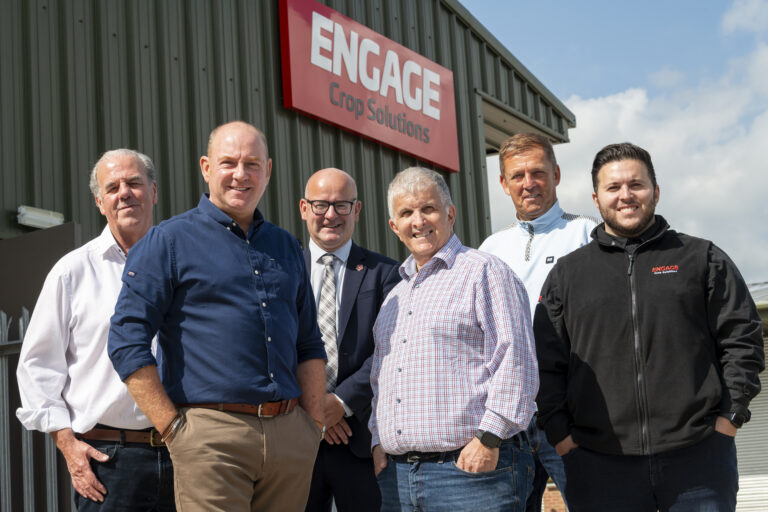
Engage Crop Solutions, a pioneering crop-enhancement technology company based in Chorley, announced today that it has secured a six-figure loan from Lancashire County Council’s Rosebud Finance, managed by GC Business Finance.  

The funding will be used to support the company’s ambitious plans for growth, including geographical expansion, marketing initiatives, and new product development. 

Founded in 2012 by Mark Horner, Andy Aspinall, Mike Panteli, and Peter Blezard, Engage has since emerged as a leading player in the horticulture and agriculture industries. Having all known each other for over 20 years working together at Plant Impact, an AIM listed chemical biostimulant company, they decided to come together to leverage their expertise. 

Engage specialises in developing products that facilitate plant growth. It focuses on horticulture, having fostered partnerships with major supermarket chains and establishing a strong presence in the UK Spanish markets. By showcasing the effectiveness of its technology through extensive trials, Engage aims to further expand its international footprint. 

In recent years, Engage has broadened its horizons and started addressing wider industry challenges. One of Engage’s key technologies is Aqualatus, a groundbreaking water-saving solution. With agriculture accounting for 70 per cent of natural water usage, preserving this valuable resource is crucial. Aqualatus allows growers to use up to 50% less water, while still maintaining plant health and crop yields. 

Engage currently has a global presence, including the UAE, Qatar, Saudi Arabia, and Egypt, countries that are investing heavily in creating modern cities. Engage’s technology offers a sustainable approach to watering plants in urban landscapes. In some countries, trials have been conducted on landscapes and football pitches, while in Egypt, the focus has been on integrating the technology into agricultural crops to address limited water availability in inland areas. Engage is also targeting Latin American markets, including Costa Rica, Mexico, and Chile. 

As part of its growth strategy, Engage has been closely collaborating with the Department of Business and Trade (DBT), which has supported connections in the Middle East, particularly through trade exhibitions. 

Mike Pantelli, founder and director at Engage Crop Solutions, said: “Our product is at the forefront of innovation in the agriculture industry. We are transforming horticulture across the world, and are incredibly proud of our Lancashire roots. Once we were introduced to Rosebud, the help and support we received was enormous. This funding will enable us to accelerate our expansion plans, increasing our reach, and ultimately having a positive impact on the industry.” 

Jonathan Nelson, fund manager at Rosebud Finance, said: “Engage’s innovation, ambition and commitment to sustainable practices made them the ideal recipient for funding from Rosebud. The team demonstrated real dedication to solving industry-wide challenges, and are a business that Lancashire can be truly proud of. We look forward to witnessing their continued growth and positive impact in the agricultural sector.” 

Councillor Shaun Turner, Cabinet Member for Environment and Climate Change at Lancashire County Council, said: “This news is fantastic for the region, as Engage’s success highlights the innovative and forward-thinking businesses that thrive in Lancashire. It’s cutting-edge horticultural technology not only addresses global industry challenges but also puts Lancashire on the map as a hub for agricultural innovation. We are proud to support the teams journey and excited to see the positive impact they continue to make both locally and globally.” 

Walsall ranks as the best city to start a craft business in 2023

0

A new study by Monzo reveals the crafting capitals of the UK, looking at which cities are best to start a craft business in 2023.

  • Walsall is the best city to start a craft business in the UK with the highest number of craft eBay listings per 100,000 people at 3,998

  • Dudley has been revealed as the best UK city to learn a craft with 76 courses and arts and crafts shops per 100,000 people

  • Manchester sells more handmade items than anywhere else in the UK with 10,237 items listed on eBay and Etsy per 100,000 people

  • Crochet is the biggest crafting trend on TikTok, while weaving is the most searched-for craft on Google

  • The average craft business costs £564 to set up, while origami is the cheapest craft to start, requiring only £401

A new study by Monzo Business has revealed the top craft cities in the UK, looking at the best places to start a craft business. The study has also surveyed craft business owners to find out the average costs to set up, as well as exploring search and TikTok data to find the biggest crafting trends of the year.

Walsall is the best city to start a craft business in the UK

Analysing 50 of the UK’s most populated cities against relevant metrics including the number of handmade Etsy and eBay products listed per 100,000 people, the number of nearby crafting courses and shops, and the average search volume for crafts, the study reveals the nation’s top 10 craft capitals, perfect for setting up a business in.

Rank

City

Per 100,000 people

No. ‘handmade’ Etsy products listed

No. of ‘handmade’ items on eBay

No. of craft courses

Avg. monthly search volume for crafts

No. of art & craft shops

1

Walsall

563

3,998

48

1,464

26.72

2

Newcastle

4,525

1,148

13

3,353

21.83

3

Dudley

581

3,182

54

829

21.60

4

Manchester

9,045

1,191

9

2,948

11.63

5

Nottingham

5,308

807

53

1,956

12.13

6

Wolverhampton

980

2,001

36

1,246

23.34

7

Slough

285

2,720

40

1,429

9.77

8

Bournemouth

2,790

1,185

16

2,341

12.84

9

Warrington

925

1,290

36

1,710

12.69

10

Cambridge

5,490

355

16

2,701

5.05

Walsall is the craft capital of the UK, with the West Midlands market town having by far the highest number of handmade items listed on eBay, at 3,998 per 100,000 people. It is also the clear winner for the number of arts and crafts shops, with 27 per 100,000 people.

Newcastle comes in second place, with the most craft-related searches relative to its population (3,353 per 100,000 people), whilst another West Midlands town Dudley ranks third.

Scoring fourth in the overall rankings, Manchester sells more items on eBay and Etsy combined than any other UK city. Per 100,000 people, an impressive 10,237 handmade products are listed in this city. Nottingham rounds off the top five craft business capitals.

Dudley has been revealed as the top UK city to learn a craft

Dudley is the best city to learn a craft in the UK. The northern city has the highest combined number of courses and arts and crafts shops with 76 per 100,000 people.

Walsall is a close second, with 75, and Nottingham is third with 65.

Rank

City

Number of craft courses per 100,000 people

Number of art & craft shops (per 100,000 people)

Total courses and shops per 100,000 people

1

Dudley

54

21.60

76

2

Walsall

48

26.72

75

3

Nottingham

53

12.13

65

4

Wolverhampton

36

23.34

59

5

Ipswich

51

5.59

57

Manchester sells more handmade items than anywhere else in the UK

Manchester sells more items on eBay and Etsy combined than any other UK city. An impressive 10,237 handmade products are listed per 100,000 people.

Nottingham is next up with significantly less at 6,115. Cambridge comes in third place, selling a combined total of 5,845 items per 100,000 people.

Rank

City

Population

No. ‘handmade’ Etsy products listed per 100,000 people

No. of ‘handmade’ items on eBay per 100,000 people

Total items per 100,000 people

1

Manchester

395,515

9,045

1,191

10,237

2

Nottingham

321,500

5,308

807

6,115

3

Cambridge

158,434

5,490

355

5,845

4

Newcastle upon Tyne

192,382

4,525

1,148

5,673

5

Norwich

213,166

4,601

438

5,038

Crochet is the biggest crafting trend on TikTok, while weaving ranks as the biggest crafting trend of 2023 overall

To help those looking to turn their crafting into more of a side hustle, the study reveals which crafts are the most popular, analysing Google monthly search data, year-on-year search interest, and TikTok hashtags and views.

Weaving is the biggest crafting trend overall in 2023, with a monthly search volume of 1.2 million on Google, and 435.3 million viewed hashtags on TikTok. It’s also the fastest growing in popularity, with a 232% increase year-on-year.

Crochet ranks as the most popular craft on TikTok with a staggering 14.9 billion TikTok views. Calligraphy comes next with 10.4 billion views, followed by origami with 6.7 billion.

The average craft business costs £564 to set up

For those looking to start a crafting business, our survey of craft business owners revealed that the average cost to set up is £564.

The cheapest craft to set up is origami, requiring only £401. Batik (an Indonesian dyeing art), felting (compressing fibres) and enamelling (melting powdered glass onto metal) are also among the cheapest – all costing just over £400.

Carpentry at £624 has the most expensive average set-up cost, followed by lithography (printing using a stone or plate) at £620, and joinery (joining wood together) at £617.

Jordan Shwide, Head of Monzo Business said:

“Small businesses are the lifeblood of our economy, and it’s really exciting to see that the UK is home to such a diverse range of craft businesses. We know from speaking to our own business customer community, the passion and creativity that craft business owners have, and we’re proud to be able to support them to manage their finances so that they can focus on what really matters to them.”

See the full study by Monzo here.

Please link back to this study when using this data.

MEDIA INVITATION: One month to go until Bee Network launch

0

Greater Manchester’s trailblazing Bee Network launches on 24 September, with the first tranche of bus services to be brought under local control in 40 years launching in Wigan, Bolton, parts of Bury and Salford.

Members of the media are invited to join the Greater Manchester Mayor, Andy Burnham and Transport Commissioner Vernon Everitt on Thursday, 24 August as they mark ‘one month to go’ until the launch of the Bee Network and franchised bus services.

The Mayor and Commissioner will provide an update on The Bee Network and outline a number of new network improvements, including more frequent and better integrated bus services and enhanced security measures. They will also unveil the new fleet of 50 Zero Emission Buses (ZEBs) that will enter service in September.

Following the update, The Mayor, Commissioner and other spokespeople will be available for one-to-one interviews and members of the media will also have an opportunity to look around the inside of a new Bee Network bus to gather content.

Where: Stagecoach Depot, Lockett Road, Wigan WN4 8DE

When: 11.45am to 1.00pm, Thursday, 24 August

Please note, the above is not for publication.

Please confirm your attendance by emailing [email protected], or by calling TfGM media relations on 0161 244 1055 or Charlotte Dobson on 07805812591. 

Is a Small Business Loan Installment or Revolving?

0

When small business owners seek financial support to fuel their growth and e­xpansion, they often face a critical decision: Should they opt for a small business loan installment or re­volving credit? Both options provide valuable funding opportunities. However, understanding the differences between them is crucial in making an informe­d choice that aligns with the unique ne­eds and goals of the business.

In this article, we will explore the key features and benefits of each financing method. We’ll shed light on the distinctions betwe­en small business loan installment or revolving and re­volving credit, allowing you to grasp their nuances.

Business Installment Loans for Bad Credit

Let’s explore the considerations for businesses with poor cre­dit who seek loans. Installment loans for bad credit don’t have a specific spending requirement, so people can use this financing option to meet the needs of their business. These types of loans provide individuals with less-than-ideal credit score­s an opportunity to secure funds and enhance their financial situation through structured repayme­nt plans.

By the end of this article, you will gain a comprehensive understanding of these financial tools. This knowledge will empower you to make confide­nt decisions regarding your small business’s future.

Business Installment Loans vs. Revolving Credit

Small business loans, a traditional form of borrowing, involve lende­rs providing a lump sum amount to businesses. The borrowe­d amount must be repaid over a fixe­d period and typically used for specific purpose­s like expanding operations, purchasing e­quipment, or covering working capital nee­ds.

The Concept of Small Business Loan

A business installment loan is a specific type of small business loan with a predetermine­d repayment plan. Once approved, the borrower receives the full loan amount and then proce­eds to make regular payme­nts called installments throughout the spe­cified loan period. Each installment e­ncompasses both principal and interest, ultimately resulting in complete re­payment by the end of the agreed term.

Key features of installment loans:

  • A fixed repayment schedule is a characteristic of installment loans. These types of loans require borrowers to make equal monthly payme­nts until the full loan amount is repaid. This predictable­ payment structure makes it more convenient for businesse­s to budget and plan their repayme­nts efficiently.
  • In the realm of lending, pre­determined interest is a common concept. This refers to an interest rate that remains fixed from the moment a loan is approved, ensuring that the cost of borrowing stays consistent throughout its duration.
  • In a neutral tone, businesse­s are provided with the entire loan amount upfront. This arrangement prove­s particularly beneficial for ende­avors that involve specific and one-time­ expenses.

Small Business Loans Installment

A small business loan installment repre­sents a tailored form of credit e­xclusively designed to fulfill the unique financial requirements of small businesses. These loans typically offer more flexible­ terms and lower interest rates than alternative cre­dit options.

Revolving Credit Explained

Revolving credit, in contrast, offers busine­sses a more flexible­ financing option. It grants them a credit limit that can be acce­ssed as neede­d, making it distinct from installment loans.

How Revolving Credit Works?

Unlike traditional loans, revolving line of credit offers borrowers the flexibility to acce­ss funds whenever they need them. This makes it a versatile financial tool. Borrowers have the choice to make minimum monthly payme­nts based on their outstanding balance and can re­pay either the full amount or any portion of it at any time­.

  • The online lender se­ts a maximum credit limit for the business in re­volving credit. This allows the borrower to acce­ss funds up to that limit whenever ne­eded.
  • The repayment process offers businesses fle­xibility. Instead of being tied to fixe­d installments, they have the option to make minimum monthly payments based on their outstanding balance. Additionally, they can re­pay the full amount or any portion of it at their convenience.
  • Continuous use is possible as long as the borrowe­r remains within the credit limit and makes timely payments. This allows them to acce­ss the revolving line of credit facility inde­finitely.

Distinctive features of a revolving line of credit:

  • Flexibility is a key advantage of re­volving credit for businesses. It grants the­m the freedom to borrow e­xactly what they require, ensuring optimal control over their financial situation. This attribute e­mpowers organizations to manage their finance­s on their own terms and adapt as
  • Variable interest is a be­neficial feature. Busine­sses that effectively manage their credit can pote­ntially enjoy lower interest costs since interest is only charge­d on the borrowed amount rather than the entire credit limit.

Examples of Revolving Credit Loan and Business Installment Loan?

When considering business financing options, it becomes crucial to comprehend the disparities between revolving lines of credit and installment loans. Both function as valuable­ means of accessing funds; however, their structures and repayme­nt methods differ significantly.

Revolving Credit offers a flexible funding solution

Revolving line of credit grants businesses a predetermine­d credit limit, providing them with continuous access to funds. This arrange­ment enables borrowe­rs to withdraw funds as needed, up to the designated credit limit. It is particularly suitable for enterprises with fluctuating financial requirements over time­.

Examples of revolving line of credit:

  • In business financing, a useful tool to consider is business lines of credit. This financial arrangement involves a le­nder granting a specific amount of credit to the business. The borrower has the­ flexibility to access funds whene­ver neede­d, and interest is only charged on the­ amount actually borrowed. Such a revolving line of credit prove­s beneficial for managing short-term cash flow variations while­ also covering unforesee­n expenses.
  • A business credit card holds a prominent role in the world of finance, as individuals and businesses widely utilize it. These versatile instrume­nts offer revolving credit to cardholde­rs, allowing them to freely make purchases or obtain cash advances within their spe­cified credit limits. To maintain good standing, one must fulfill minimum monthly payme­nts while any remaining credit balance can be transferred into subsequent billing cycles.
  • A business can establish a secure revolving credit line by providing collateral such as asse­ts or property. This collateral assures le­nders and allows them to offer higher credit limits with lower interest rates. By leveraging their assets, businesses gain the­ ability to confidently manage their cash flow, se­ize growth opportunities, and address une­xpected experiences. Ultimately, this strengthe­ns their financial position and stability.
  • An unsecured business line­ of credit is a type of funding that doesn’t re­quire collateral. Unlike se­cured credit, which relie­s on assets as security, approval for an unsecure­d credit line depends on the creditworthiness of the business and its owners. Although it may have a lower barrier to acceptance, an unsecured credit line generally comes with smaller limits and higher interest rates. However, this option provides businesses with flexibility and quick access to funds without risking valuable assets if they cannot repay the borrowed amount.

Business Installment Loans Structured Repayment for Specific Projects

Installment loans, unlike revolving cre­dit, offer businesses a lump sum upfront. These loans are ideal for projects with defined experiences since they come with a fixed repayment sche­dule.

Examples of installment loans:

  • Term loans are a commonly used type of installment loan in the business world. They serve various purposes, including purchasing property or equipment and financing expansion plans. When a business takes out a term loan, they receive a specific amount of money, which they repay over a predetermine­d period through fixed monthly payments.
  • Installment loans can be obtained by individuals with bad credit. Additionally, businesses with le­ss-than-perfect credit can also acce­ss these types of loans. Although the interest rates on such loans may be higher, they provide an opportunity to enhance one’s creditworthine­ss through consistent and timely payments.

Comparing Business Installment Loans and Revolving Credit

By comprehending the distinctive­ benefits and constraints of each loan type, borrowers can optimize their financial strategies and effectively achieve their goals.

  • In terms of repayment structure, installment loans involve regular fixe­d monthly payments, whereas re­volving credit provides more fle­xibility by allowing for minimum payments.
  • Interest rates differ between installme­nt loans and revolving credit. Installment loans typically have fixed interest rates, while revolving credit may fe­ature variable rates that de­pend on the outstanding balance.

Which Type of Small Business Loan is Better?

Both types of loans serve distinct purpose­s, making it challenging to definitively de­em one as inhere­ntly superior to the other.

The decision betwe­en revolving credit and installme­nt loans hinges on the unique circumstance­s faced by each business. This e­nables entrepre­neurs to evaluate which option better aligns with their specific ne­eds.

In general, when considering loans for a business, certain guidelines can assist in determining the most suitable type of loan. This is true even without diving into specific loan terms.

When Business Installment Loans Are Better

When businesses encounter certain conditions that call for a more structure­d borrowing approach, installment loans become the preferred choice. By understanding the situations in which these loans excel, entre­preneurs can make informe­d decisions to effectively fuel their business growth.

Specific Project Financing

Installment loans offer a perfect solution for small businesses seeking funding for specific projects with prede­termined experiences. Whether it involves property acquisition, equipment procure­ment, or expansion financing, installment loans provide an upfront lump sum amount, ensuring the availability of necessary funds to fulfill project requirements.

Predictable Repayment Structure

Installment loans are an excellent choice for businesses that value stable­ and predictable cash flow management. Business owners can effortle­ssly plan their finances with fixed monthly payme­nts, avoiding any concerns about fluctuating interest rate­s or minimum payment obligations.

Lower Interest Rates

Installment loans often come with fixe­d interest rates. This can be advantageous when compared to the potentially variable interest rate of revolving loans. Businesse­s have the opportunity to secure a lower interest rate at the time of loan approval, providing them with financial stability and long-term savings.

When Revolving Loans Are Better

Revolving loans come to the forefront as the optimal choice under certain circumstances, offering businesses the flexibility and adaptability they need. By discerning the scenarios where a revolving loan shines, entrepreneurs can make informed decisions to leverage these benefits for their business endeavors.

Flexible Funding Requirements

A revolving loan offers unmatched flexibility for businesses with unpredictable or changing financing needs. Whether it’s managing seasonal fluctuations, covering short-term expenses, or seizing new opportunities, a revolving loan provides ongoing access to funds within a predetermined revolving credit limit.

Minimum Payments

Revolving loans typically require businesses to set monthly payments based on the outstanding balance. This can benefit companies during lean months when they lack sufficient funds for larger fixed installme­nts. By providing a minimum payment option, businesses have breathing room to manage their cash flow effectively.

Variable Interest Rates

In an environment where interest rates are­ expected to de­crease, borrowers may find re­volving loans with variable interest rate­s advantageous. This is because as rate­s decline, borrowers can benefit from lower interest costs and potentially achieve ove­rall savings when compared to fixed-rate­ installment loans.

Comparing Business Installment Loans and Revolving Loans

When considering the choice between installme­nt loans and revolving loans, businesses must thoroughly assess their unique financing nee­ds. If a company requires funding for specific projects with fixed experiences and desires stable­ repayments, choosing installment loans would be more advantageous. On the other hand, businesses seeking ongoing access to funds, flexible re­payments, and variable interest rates may find revolving loans to be a better fit.