Home Blog Page 170

Dave Antrobus: The Intersection of AI and Blockchain Technology

0

By 2025, the market for AI and blockchain could exceed £50 billion worldwide. Dave Antrobus, a leader in the UK tech scene, is at the heart of this growth. He is the Co-Founder and Chief Technology Officer of Inc & Co. Dave is using AI and blockchain to transform the finance world. This makes digital finance safer, clearer, and more eco-friendly. His work hints at a big change in how we view and handle digital finance. This article will explore how Dave Antrobus is merging these technologies to create new possibilities.

The Vision of Dave Antrobus: AI and Blockchain Technology

Dave Antrobus leads in merging AI and blockchain technology with great insight. He uses his knowledge to push the UK into a new digital age. His ideas show how AI and blockchain can change things, making strong systems for the future.

Antrobus is keen on combining AI with the latest blockchain technology. This move aims to boost UK’s tech growth. His plan is to create an innovative digital space, making the UK a top tech leader. He focuses on more than just tech. He wants to build a community of bright thinkers for a solid digital future.

Transforming UK’s Digital Finance Landscape

The digital finance scene in the UK is changing in exciting ways, thanks to AI and blockchain. Innovators like Dave Antrobus are leading this shift. They aim to make money dealings not only quicker but safer and clearer too. This change is creating new standards in the industry and altering old financial roles.

This transformation is making things work better and more smoothly. By using blockchain and AI, banks can make their process better and satisfy their customers more. This means every deal is carefully recorded and watched, offering unmatched security in finance.

The move to digital is also helping smaller companies get into the market. Up until now, small and medium businesses struggled to get traditional bank services. But AI and blockchain are changing that, offering them custom services and better fraud protection. This is helping all kinds of businesses grow in a digital world.

Customers are also seeing the good sides of this digital shift. They’re enjoying faster services, lower costs, and clearer processes with banks. These new techs are bringing people closer to their banks, building trust. It’s also making banking greener and more efficient, which is great for everyone.

AI and Blockchain: A Perfect Symbiosis

In our world today, tech advances are changing how industries work. The partnership between AI and blockchain is leading this change. Together, they create a powerful force in digital finance, pushing innovation and security.

AI’s smart abilities, like learning and correcting itself, fit well with blockchain’s secure and open design. This combo boosts data security, makes operations smoother, and builds trust in online deals. For example, AI can spot fraud instantly while blockchain keeps data safe and checkable.

Experts think AI might add $15.7 trillion to the world economy by 2035. Machine learning and deep learning are key. By adding blockchain, we get a strong digital finance combo. This is crucial for the UK’s lasting economic methods.

The Decentralized AI Fund by Grayscale shows how well this tech mix works. It uses tokens such as Bittensor, Filecoin, and Near. These show the worth of markets, storage, and fast blockchain apps that are decentralized. Each token uses blockchain for safety and supports AI’s need for data. Together, they show a great partnership.

In the UK, leaders like Dave Antrobus are guiding this tech journey. They ensure AI and blockchain not only work together but also help each other grow. With predictive models and self-learning systems powered by blockchain, a new chapter of tech-led economic progress is starting.

The Role of AI in Enhancing Blockchain Security

In today’s digital world, mixing AI with blockchain security is becoming more common. Figures like Dave Antrobus push for combining these technologies to make blockchain more secure. This mix makes online transactions safer and builds trust in finance.

Antrobus’s tech solutions show how AI can find and handle security risks. AI can look through a lot of data quickly, spotting dangers that normal security might miss. This means AI can make blockchain even safer by spotting threats early and keeping operations secure.

Many countries are quickly adopting real-time payments, like India’s UPI system and Brazil’s setup. This shows how important AI is for handling and protecting these fast, large transactions. Projects like Swift GPI and ISO 20022 are working to make international payments better and safer, showing the need for solid blockchain security.

Antrobus believes AI is key to fixing old financial system flaws, like ACH fraud. For example, AI used by Finexio can correctly predict if suppliers will take virtual cards 90% of the time. So, bringing AI and blockchain together is not just about new tech but creating a safer digital finance world.

Future Tech: Trends in Financial Innovation

In recent years, the UK’s fintech scene has transformed dramatically. Financial innovation trends now shape how we use and deliver services. Dave Antrobus‘s forecast reveals the growing importance of AI and blockchain technology. These aren’t just small changes; they’re reshaping finance. The move towards sustainability and innovation reflects today’s financial tech progress.

Antrobus believes that AI and blockchain will make finance more robust and secure. This combination promises greater transparency, lower costs, and more trust from customers. Companies like Sabio Holdings Inc. are already benefitting, taking significant credit to fund their projects. SLR Digital Finance, for instance, supports digital media pioneers with loans up to $150 million.

DeFi shows the future path of finance technology. It removes middlemen, using blockchain to make finance easy and open. At the same time, NFTs are becoming popular in art and gaming, proving blockchain’s wide use.

Yet, these advances bring challenges. The environmental effects of blockchains and fast AI growth offer risks and opportunities. Innovation must be responsible, with strong security. How well we tackle these issues will shape the success of future financial tech.

Impact on Traditional Financial Institutions

Dave Antrobus has started a new era with his digital work. This change greatly affects old financial groups. His work with AI and blockchain has changed how money is handled, making old banks rethink their ways. They need to change quickly to keep up with new tech.

New tech in money handling shows the big impact of fintech. For example, Finexio makes paying bills easier with its tech. This proves Antrobus was right: modern tech is key for banks to grow.

Banks are also teaming up with fintech firms. Sabio Holdings Inc. got a big loan and uses AI to get better. This shows banks need new ideas to stay ahead. Sticking to old ways, like paper cheques, is risky and can lead to fraud.

Going digital makes banking safer and more efficient. Finexio’s “Shield” fights fraud well, showing tech’s role in better banking. This move away from old methods helps stop fraud and makes things run smoother.

As fintech grows, banks must use new tech to keep up. They’re making payments safer and using AI to work better. This change is seen all over banking, showing the big shift happening. Antrobus saw this need for change, pushing banks to modernise.

Dave Antrobus on the Regulatory Challenges

Dave Antrobus highlights the need for strong rules in AI and blockchain advancement. He believes the UK’s digital economy is at a crucial point. It needs policies that encourage innovation and ensure that new technologies meet industry standards. These rules should also protect users’ data and privacy because technology is always changing.

Emerging technologies like AI and blockchain bring legal issues. Antrobus says we need clear policies to tackle these problems. He argues that laws must keep up with technology changes.

The UK’s tech sector is known for its excellence, diversity, and community spirit. This environment is perfect for creating policies that match Antrobus’s goals. A book named ‘The Sovereign Individual: Mastering the Transition to the Information Age’, priced at £12.29, agrees with him. It says these technologies can change the world and stresses the importance of innovative tech governance.

Antrobus knows there will be legal hurdles but believes in solving them together. Policymakers, tech firms, and leaders must work as a team. The laws must adapt to meet today’s and tomorrow’s needs. This will help keep the digital market safe and fair for everyone. Antrobus’s experience and insights are guiding the UK’s digital economy regulations.

Case Studies: Successful Implementations in the UK

In the UK, AI and blockchain have seen successful use. Hawk, a leader in stopping financial crimes, got more Series B funding thanks to Macquarie Capital. It’s known for using AI to combine anti-money laundering, sanction checking, and fraud prevention into one strong system. Investors like Rabobank and BlackFin Capital Partners helped Hawk grow. Macquarie Capital’s recent support shows they believe in Hawk’s future and its impact on global blockchain use.

Hawk has made a big leap forward with its fraud detection tools. These tools, especially the Entity Risk Detection module, mix entity resolution, network study, and fast risk spotting to help clients find risks and do thorough checks. This case study shows how AI can make blockchain better, offering real benefits for the finance world. It sets an example for others wanting to mix AI and blockchain.

Another great example of using blockchain is in real estate. A startup from the US East Coast worked with Brazil’s Real Estate Registry to make a blockchain system for managing land. This shows how technology can cross borders and could work in the UK too. Places like EY wavespace help businesses try new technologies. These UK case studies show how AI and blockchain are changing different areas, with Dave Antrobus leading the way in innovative applications.

Exploring Hair Transplant Methods In Manchester: Which One Is Right For You?

Hair loss is a common concern for both men and women. While there are medications and lifestyle changes that can slow it down, many people turn to hair transplantation for a more permanent solution. However, with several hair transplant methods available, choosing the right one can be confusing.

This guide will explore the most popular techniques, explaining their pros and cons to help you determine which one best suits your needs and goals for a thicker, fuller head of hair.

Follicular Unit Extraction (FUE)

FUE is a popular hair transplant method that involves extracting individual hair follicles directly from the donor area using a micro-punch tool. These follicles are then implanted into the balding or thinning areas of the scalp. Unlike FUT, FUE does not involve the removal of a strip of skin, which means there is no linear scar.

In Manchester, leading hair transplant clinics specialize in the FUE method, providing advanced techniques and personalized care. These Manchester-based professionals are renowned for their expertise in achieving minimal scarring and natural-looking results. The city’s top clinics attract clients from across the UK, drawn by the high standards and exceptional outcomes offered by experienced Manchester hair transplants‘ surgeons.

  • Pros: One of the main benefits of FUE is the minimal scarring; the small, round scars left by the micro-punch tool are much less noticeable than the linear scar from FUT. This makes FUE an attractive option for individuals who prefer to wear their hair short. Additionally, FUE has a shorter recovery time compared to FUT, with less post-operative discomfort.
  • Cons: On the downside, FUE is generally more expensive than FUT due to the time-consuming nature of the procedure, especially if a large area needs to be covered. The process can also be lengthy, as each follicle is extracted individually, which can be a limiting factor for some patients.
  • Ideal for: FUE is ideal for patients who need fewer grafts or are concerned about visible scarring. It’s also suitable for those who prefer to keep their hair very short and want a quicker recovery time.

Follicular Unit Transplantation (FUT)

FUT is a method that involves the surgical removal of a strip of skin from the back or side of the scalp, where hair is typically more resistant to balding. Once the strip is removed, it’s dissected into individual follicular units, each containing one to four hairs, under a microscope. These units are then meticulously transplanted into the thinning or balding areas of the scalp, including the crown, to ensure a fuller and more natural-looking result.

  • Pros: One significant advantage of FUT is that it allows for the transplantation of many grafts in a single session, making it an efficient option for those with extensive hair loss. Additionally, FUT tends to be less expensive compared to other methods, which can be a critical factor for many patients.
  • Cons: However, FUT does have its drawbacks. The procedure leaves a linear scar at the donor site, which can be a concern for individuals who prefer shorter hairstyles, as the scar may be visible. Moreover, the recovery time for FUT is generally longer than that for FUE, and there may be more post-operative discomfort due to the nature of the surgery.
  • Ideal for: FUT is ideal for patients who need many grafts and are not overly concerned about a linear scar. It’s also suitable for those looking for a more cost-effective option for hair transplantation.

Robotic Hair Restoration

Robotic hair restoration is an advanced form of FUE that utilizes robotic systems to assist in the extraction and implantation of hair follicles. This technology increases the precision and accuracy of the procedure, reducing the risk of human error and improving the overall results.

  • Pros: The primary advantage of robotic hair restoration is the increased precision in both follicle extraction and implantation. The use of robotics ensures consistent, high-quality results, and can also speed up the procedure. This method is less invasive, which can lead to a quicker recovery time and less post-operative discomfort.
  • Cons: However, the advanced technology used in robotic hair restoration is more expensive, making it one of the more expensive options available. Additionally, not all clinics have access to this technology, which can limit its availability to patients.
  • Ideal for: Robotic hair restoration is ideal for patients who are looking for the latest technology in hair restoration and can afford the higher cost. It’s also suitable for those who prioritize precision and consistency in their results.

Direct Hair Implantation (DHI)

DHI is a method like FUE but involves the use of a special pen-like tool known as the Choi Implanter Pen. This tool allows for the direct implantation of hair follicles into the scalp without the need to create recipient sites beforehand, offering more precise placement and less trauma to the scalp.

  • Pros: DHI offers high precision in hair placement, which can result in a more natural-looking hairline and overall appearance. The technique minimizes trauma to the scalp, leading to a faster recovery time and less post-operative discomfort.
  • Cons: The specialized equipment and technique used in DHI make it more expensive than traditional FUE or FUT. Additionally, the process can be more time-consuming, especially for large areas, as it requires meticulous placement of each follicle.
  • Ideal for: DHI is ideal for patients seeking high precision in hair placement and a minimally invasive option. It is also suitable for those who want a quicker recovery time and are willing to invest in a more costly procedure for better results.

Ultimately, a consultation with a hair transplant specialist is essential. They can assess your specific situation, discuss your goals, and recommend the most suitable method based on your hair type, extent of hair loss, and overall health.

7980d611 b09d 4afc 9934 8e17fd554404

Conclusion

Remember, a hair transplant is an investment in both your appearance and your self-esteem. By making an informed decision, you’re one step closer to regaining a full head of hair and the confidence that comes with it.

Paris 2024: Alcaraz reaches Olympic final on debut

Carlos Alcaraz flew past the challenge of Canada’s Felix Auger-Aliassime to reach the Olympic tennis final.

The four-time Grand Slam winner won 6-1 6-1 against the 13th seed at Roland Garros and now will have the chance to win gold against either Novak Djokovic or Lorenzo Musetti.

Spain’s 21-year-old phenomenon made things look easy on the clay courts and will contest his third major final in two months.

Djokovic, Alcaraz’s potential opponent, is seeing a first Olympic gold medal, the one major title missing from his collection.

The pair met at the Wimbledon final last month, where the Spaniard won out in straight sets.

And Alcaraz is full of confidence and delivered a message after his semi-final to the Spanish fans at home.

He said: “Get ready… for the show that I am going to give you (laughs).

“I don’t know, just that I expect you to cheer, I truly appreciate the people in the stadium and those who have come here to Paris to support, they are very important backing for me in this tournament.

“To those at home, who are many Spaniards, I thank you for the support. Be watching on TV, cheering on every point with me: I am going to give you what you want, which is the gold.”

Freddie Flintoff feeling ‘lucky’ to be in Hundred coaching role

England legend Freddie Flintoff says he feels “lucky” to be coaching in the Hundred following his serious car accident in 2022.

The cricket icon was injured while filming an episode of Top Gear, leaving his face severely scarred.

After taking some time away from the spotlight, the 46-year-old returned to his beloved sport, first with England and now as head coach of Northern Superchargers.

Flintoff played 79 Test matches for England between 1998 and 2009 before transitioning into TV, presenting Top Gear and featuring as a regular panelist on A League of their Own.

Speaking in an interview with the Hundred, he said: “Cricket has given me so much.

“It’s all I ever wanted to do as a kid and I got the opportunity to live my dream.

“And then it led to a lot of things away from the field. Working in TV all those years was essentially because I played cricket, and it’s nice to come back into that.

“I am a little bit nervous but I think it’s natural to be because it means you care, doesn’t it?

“I feel really lucky to be back here and I want the lads to cherish playing. When you finish playing, you look back and it passes so quickly, but you just take time when you’re out there, just to have a look around and take it in and live in the moment.

“And that’s what I’m doing these days. It’s living in the moment and enjoying it. And that’s something I want the players to do, and the teams that play under me to do as well.”

His new role is his first head coach role in professional cricket and he is expected to remain on the sporting side of things for the foreseeable future before returning to TV.

5 Eco-Friendly Exhibition Freebie Ideas

Freebies are an excellent way to boost return on investment at exhibitions, trade shows and conferences! A good freebie can attract more visitors, build brand awareness, leave a lasting impression and create excitement around your brand. However, freebies with little purpose can easily become wasteful. The exhibition industry already has a deep-rooted issue with waste, especially from traditional custom-built stands, thrown in landfills after two to three days. To avoid adding to this problem, ensure that your freebies are genuinely useful to your target audience or use sustainable materials.

We spoke to Quadrant2Design, a UK-based exhibition stand design and build contractor with over 20 years of experience in sustainable modular stands. They gave us some fantastic ideas for sustainable freebies.

FREEBIE 1024x576 1

Coffee Cups, Bottles and Flasks

Everybody loves a free bottle. These come in many designs and styles that are useful and practical for all guests.  Not to mention, their use in public spaces can help you gain brand awareness.

  • Glass coffee travel cup: You’ll be sure to impress with a unique and trendy glass travel mug! These freebies are perfect for companies at smaller exhibitions with a targeted group of clients to impress.
  • Bamboo Travel Mugs: An alternative option is a bamboo travel mug! These are made using sustainable materials but have a classy finish.
  • Reusable Flasks: Reusable flasks are always useful! For a unique touch, you can partner with Ocean Bottle, a sustainable company that cleans up around 1000 bottles for every reusable bottle sold.
  • Classic Recycled Travel Mug: There is no harm in using a classic design. If you’re planning to supply a lot of freebies, a classic travel mug is a perfect choice.
  • Foldable Cup: Don’t forget the pop-up and foldable cups. These are perfect travel items for guests as they are easy to carry!

Utensils, Tupperware, and More

Consider branded utensils as your merchandise if you’re exhibiting at a food and beverage trade show.

  • Branded Utensil kits: Many visitors work in offices where they bring lunch. These kits are perfect for handbags and eating on the go!
  • Branded Lunch Boxes: Likewise branded eco lunch boxes are a great freebie to hand out, and they’ll likely get a lot of use.

If these ideas aren’t for you, look into branded bottle openers, wine openers, metal straws or can crushers!

Clothing and Other Merchandise

  • Tote Bags: These are a classic trade show giveaway! Tote bags can be useful, but their overuse in shows can make them less interesting. Consider using an interesting design if you want your merchandise to stand out!
  • Clothing: Branded merchandise like hats, sunglasses, socks and t-shirts seem like odd giveaways. However, they can be successful if done properly! Think of brands like MacDonald, Lidl and Ikea, and how well their merchandise was received. This giveaway might not work effectively for every brand, but it’s worth looking into.

Useful Tech and gadgets

Because smartphone usage is at an all-time high, phone-related technology, gadgets and accessories are very popular. These products are great for all industries and there are plenty of sustainable versions to choose from.

  • USB Hard Drive: This is a classic trade show freebie, but it’s an all-time favourite as it’s practical and useful. Customise the USB with your branding to remind the user of your company.
  • Wireless Charger: Wireless Chargers are among the most useful freebies you can offer. These can be purchased in various styles, including a bamboo finish!
  • Three-in-one Charging Cable: You can’t go wrong with a three-in-one cable. This is the type of freebie that people will never throw away. They are perfect for travel, office use and handbags.
  • Power Bank: At trade shows nowadays, lots of processes and detail swapping involve the use of phones, so sufficient charge is important. If you can supply a key decision-maker with something useful like a power bank, you will be much more memorable!
  • Lightning Charger Fan: For a little more fun, try mini fans, powered by smartphones. Exhibition halls get very hot, and these fans are a great way to keep guests cool.
  • Phone Holder: Our final gadget suggestion is a phone holder. These come in sustainable wooden and bamboo finishes and are great for guests to keep on their work desks!

Subscriptions

The suggestions for freebies have all been practical or utilised sustainable materials. A more sustainable alternative to these physical giveaways is to offer discounts or free trials for your services!

Consider offering free trials, discounted subscription rates, or loyalty points to trade show visitors.  This will encourage visitors to try your products and services and make you more memorable following the show!

To Sum Up

When planning your sustainable giveaway, the best thing you can do is choose something that is genuinely useful and will not be binned. Next, look for sustainable materials and ethical sourcing! Finally, consider subscriptions and discounts that could draw new users to try your products!

Paris 2024: GB climb to third in medal table after golds in jumping, trampolining and rowing

Great Britain climed to third in the Olympics medal table after Scott Brash, Ben Maher and Harry Charles earned a brilliant gold in the men’s team jumping final.

Briony Page won gold in the women’s trampoline final shortly after Emily Craig and Imogen Grant continued their unbeaten streak by easing to victory in the lightweight double sculls.

There was a silver for Tom George and Ollie Wynne-Griffith in the men’s event while it was bronze for Jack Laugher and Anthony Harding in the 3m synchronised diving.

GB win ninth gold in jumping

Great Britain won Olympic team jumping gold for the first time since London 2012 with a near-faultless performance in Paris.

The British trio of Maher, Charles and Brash picked up just two penalties to top the standings at the stunning Chateau de Versailles.

It takes GB to third in the medal standings, level with United States, who took silver, and above bronze winners France.

Page wins trampolining gold

Page now has an Olympic medal of every colour after adding a gold to her silver at Rio 2016 and bronze in Tokyo.

The two-time champion knew she had to beat Viyaleta Bardzilouskaya’s score in the final, with a look of disbelief when the scores were confirmed.

Bardzilouskaya got the silver medal with Canada’s Sophiane Methot collecting bronze.

Craig and Grant banish Tokyo heartbreak

GB duo Grant and Craig missed out on a medal at Tokyo by 0.01 seconds but they have used that heartbreak to their advantage ever since.

The pair pinned up a photo of that photo finish three years ago as motivation and now have a gold medal to add to their back-to-back world and European triumphs.

Little of the drama of Tokyo was on show here, as the British pair comfortably stormed to victory.

Agony for Wynne-Griffith and George

There was no such joy for men’s pair Oliver Wynne-Griffith and Tom George who were dramatically pipped to gold late on.

Welsh rower Wynne-Griffith and George of England led for the majority of the race after a brilliant showing but fell victim to a late surge by Croatia’s defending champions Martin and Valent Sinkovic in the final 20 metres.

A disappointed Wynne-Griffith said: “I made a mistake on the line and that’s racing for you,” he said. “Olympic silver medallists, I’m so proud of what we did.

“We had a great start and a great first 1500m, just on the last four strokes it was a case of winning or losing unfortunately.”

177,000 new homes on brownfield land to tackle the North West’s housing crisis

New research from the Northern Housing Consortium (NHC) has found there is capacity for up to 177,000 new homes on brownfield land in the North West.
This would help the government deliver 1.5 million new homes over the next five years and play a part in finding homes for the 190,000 people currently on the region’s housing waiting lists.
The NHC is calling for a £4.2 billion funding package from government over ten years to prepare the brownfield land in the North for new homes.
The current Brownfield Housing Fund is set to support 24,000 new homes. However, NHC research has found Whitehall red tape is stifling the effectiveness of this fund and some of the North’s brownfield sites are not eligible for funding.

Delivering homes

To deliver as many homes as possible on Brownfield land over ten years Government funding must be:
  • Devolved not delegated: Give combined authorities the control to use funding in line with local priorities.
  • More flexible with funding requirements: Current value-for-money requirements mean sites in areas with lower land values are often not eligible. Areas most in need of regeneration are losing out.
  • Longer-term: With the current fund, land remediation work must be completed by March 2025. This means more complex sites, such as contaminated land, are not eligible for support.
  • Supported by increased capacity in local government and combined authorities, including in planning. The government has said they will increase planning capacity which will help local government and combined authorities plan a strategic pipeline of Brownfield projects. But more needs to be done.
Chief executive Tracy Harrison (pictured) of the Northern Housing Consortium said: “There is a massive opportunity in the North West to unlock land for up to 177,000 homes, helping provide much needed homes, regenerate communities and rebalance the economy away from London and the South East.
“But the current funding rules don’t work. Central government requirements mean some of the most deprived areas in need of regeneration are not being developed to provide much needed homes. Brownfield funding should be further devolved to give local government and combined authorities the flexibility to use it where it’s needed most.
“The Ministry for Housing, Communities and Local Government (MHCLG) has started to review brownfield funding and the value-for-money appraisal process for housing and land investment. We are keen to work with the government to deliver changes which will help our members regenerate communities and unleash the benefits of brownfield-first development.”
The NHC is a not-for-profit membership organisation representing local and combined authorities, housing associations and ALMOs across the North of England. Its members own or manage 9 out of 10 of the socially rented homes in the North.

Appeal for information following fatal road collision in Oldham

0

Police are appealing for more information following a serious road traffic collision in Lees, Oldham.

At around 11.25pm on Monday, July 22, a 58-year-old man was driving a Mitsubishi Lancer along Elliott Street and crossed the carriageway of High Street, before colliding with a building.

Despite the best attempts of emergency services, he passed away at hospital.

Greater Manchester Police’s Serious Collision Investigation Unit (SCIU) is now appealing for information, including doorbell and dashcam footage to help understand the full circumstances.

Detective constable Alexandra Giblin said; “Firstly, our thoughts are with the loved ones of the man that sadly lost his life in this collision. They are continuing to receive the necessary support.

“Our enquiries are still progressing at pace and I would urge anyone with information or detail that could help us bring answers should do so at the earliest available opportunity.”

Anyone with information is asked to call 0161 856 4741 direct or 101 quoting incident 4021 of 22/07/2024. Alternatively, details can be passed via Crimestoppers on 0800 555 111.

Lubrizol helps Heaton Park visitors take a walk on the wilder side

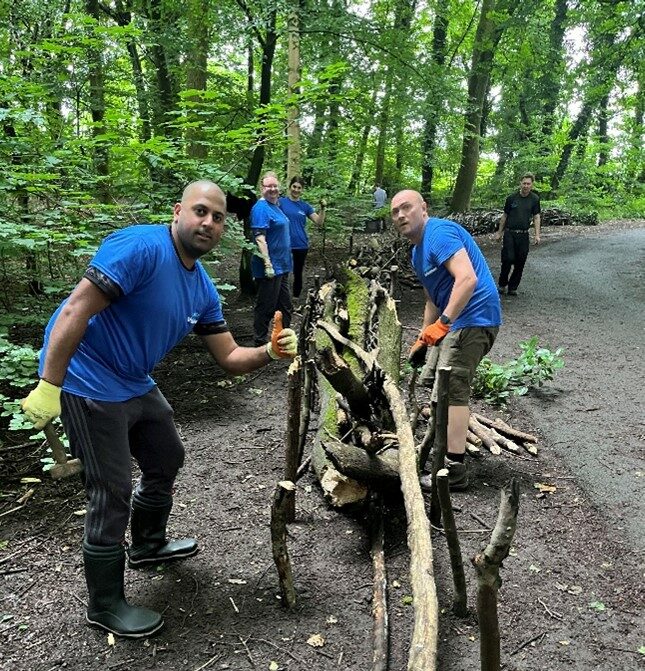
Staff at Manchester science company Lubrizol swapped test tubes for twigs as they created an environmentally-friendly ‘dead hedge’ in the city’s biggest park.

Heaton Park now boasts a long, wildlife-friendly hedge made from branches and twigs, thanks to the voluntary efforts.

The team based in Blackley, normally work in the field of chemistry but volunteered their services as part of Lubrizol’s ‘Global Month of Impact’ project which sees its employees giving back to communities all over the world.

They worked hard transporting wood to the area and building the dead hedge which is intended to provide hiding places and nesting habitats for many creatures, food for insects, as well as acting as a natural barrier preventing people from cutting through the adjoining woodland so it can be a haven for flowers.

Heaton Park’s senior estate officer Dave Delaney, said the dead hedge was vitally important for the ecology of the park.

He said: “The Lubrizol team created a large “run” of hedging that will protect the ground from erosion and provide a strong, safe habitat for our resident critters for a long time whilst increasing the biodiversity of the area.

“Heaton Park is very grateful for the hard work and enthusiasm everyone from Lubrizol put in and we would be happy to have them back for future projects.”

Covering more than 600 acres, Heaton Park attracts millions of visitors a year and is also situated near Lubrizol’s offices.

Sarah Boothby, part of the Lubrizol team, said: “We were delighted to give our time to create this attractive new feature for the park. It’s important to us to give back to the communities we serve.

“By creating a wildlife-friendly barrier, the volunteering efforts of the Lubrizol team will be seen for years to come.”

State-of-the-art Esports Lab opens its doors for Salford students

University of Salford’s Business School has launched a brand new state-of-the-art Esports Lab ready for the new academic year.

The bespoke, industry pioneering lab provides an immersive environment and has been purpose-built to host the digital requirements of students completing the University and Greater Manchester Institute of Technology’s (GMIoT) Higher National Diploma (HND) Esports Business Management programme.

Equipped with a tournament arena, industry grade broadcasting equipment, including Blackmagic 4K cameras and television studio mixers, plus an esports suite for teaching, learning and gaming, the lab is designed to support students looking to pave the way in this rapidly expanding and innovative sector.

In addition, the Lab has 23 Yoyotech i9 RTX Esports Gaming PCs with Intel i9 Processors and NVIDIA RTX 4080 Super graphics cards, amongst other industry leading technology. The lab’s teaching and six seat tournament space has been designed to accommodate broadcasting and competitions, while its Formula 1 licensed racing simulator resembles the very technology drivers themselves use to prepare for the tracks, providing a truly immersive experience that emulates the cockpit.

According to Uswitch, the global esports market is expected to generate £3.41 billion in revenue this year. With a compound annual growth rate of 7.1%, this figure is forecast to reach £4.52 billion by 2028. To add to this, as of 2024, around 11.7% of the world’s population is estimated to participate in the esports market, equating to almost 948 million people worldwide[i].

Iain Earle, program leader for Esports Business Management at Salford Business School, said: “There’s no doubt that esports is a thriving industry. Whilst once seen as a hobby for many, in recent years it’s been transformed into one of the biggest entertainment markets on the planet. It’s now worth billions, making it not only a viable career route, but an incredibly lucrative one at that.

“Esports is a rapidly growing and ever-evolving sector so, with the latest cutting edge technology integrated into the Lab, we have made a considerable investment to really elevate our student experience in this space, while ensuring access to industry grade equipment. Salford is now home to higher education’s leading Esports Lab which will be instrumental in ensuring our students have been fully immersed in the latest technology disrupting the sector, as they progress into their graduate careers.”